Both Gamezy and Halaplay are pitched at the same audience as Adda52 — Indian fantasy cricket players who care about strike rate, captaincy leverage, and small-stakes contest depth. Here is how they stack up on the dimensions that actually move a season-long ROI, not the brochure claims.

· Adda52 News Desk
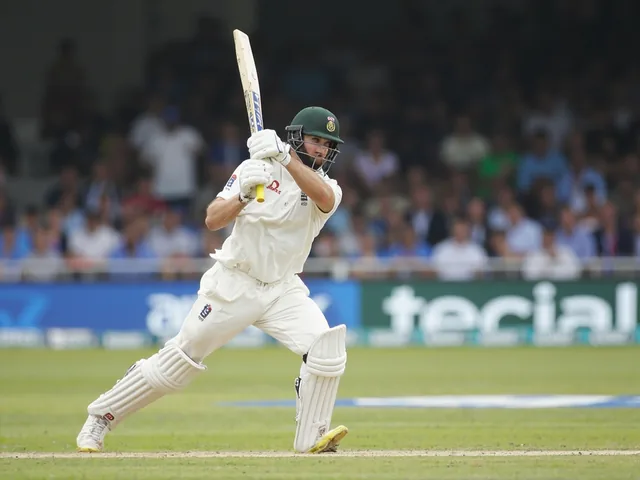
Most fantasy app comparison articles spend 80% of their word count on UI screenshots and 20% on the math. Adda52 readers who have played Gamezy or Halaplay know that the math is the entire game. Two apps can look identical on screen and produce wildly different captaincy scores, simply because the strike-rate bonus kicks in at a different threshold or the boundary bonus is weighted differently for captain vs vice-captain.
Gamezy's T20 point system gives a 0.5x bonus for runs between 30-49, 1x for 50-79, 1.5x for 80-99, and 2x for 100+. Halaplay's ladder is 0.5x at 30, 1x at 50, 2x at 100. On a 35-ball 45, Gamezy credits 4.5 bonus points while Halaplay credits 2.25 — Gamezy almost doubles Halaplay on the same score. On a 100, both apps pay 2x, so the apps tie at the extremes. For the bulk of T20 scores (30-79), Gamezy systematically rewards the average innings more aggressively.
Bowling math diverges too. Halaplay credits 4 points per wicket for bowlers with economy under 6, dropping to 2 points at 6-8 economy. Gamezy uses a flat 25 points per wicket regardless of economy, plus a 4-point bonus for LBW/Bowled. For wicket-taking bowlers (the kind Adda52 readers tend to captain in Chennai and Hyderabad), Gamezy's flat-rate structure is more predictable and easier to back-test.
Gamezy takes a 12% commission on grand-league contests with 100+ entries; Halaplay's commission on equivalent contests sits at 14-15% depending on the prize pool structure. For a Rs 100 grand-league entry, Gamezy's 2-3% commission gap translates to Rs 2-3 saved per entry. Multiplied across a 14-match IPL window where you might enter 5-7 grand leagues per match, that is Rs 700-1500 in pure savings on the same expected outcome.
Where Halaplay claws back is small-stakes contests. Halaplay's Rs 1 and Rs 3 contests have a lower fee overlay (around 8-9% commission) compared to Gamezy's flat 10% on sub-Rs 10 contests. If your Adda52 play style leans heavily on the Rs 1-Rs 5 micro-contest range — the kind of grind that compounds over a season — Halaplay is structurally cheaper per rupee staked. The breakeven point is roughly Rs 25 average entry: above Rs 25, Gamezy wins on commission; below Rs 25, Halaplay wins.
Adda52 readers who play both small and grand-league contests can stack apps: use Halaplay for micro-contests and Gamezy for grand-league and head-to-head. Most players do this anyway, but the explicit commission math makes the rotation discipline easier to maintain.
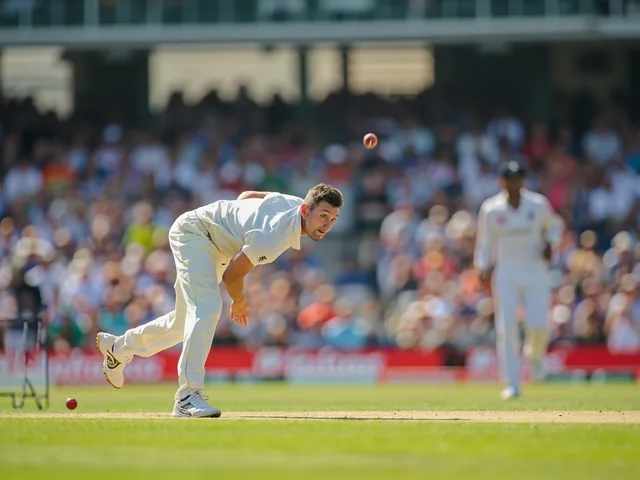
Gamezy processes UPI withdrawals in 30-90 minutes during business hours and 2-4 hours overnight; bank transfers take 6-12 hours. Halaplay advertises instant UPI withdrawals but in practice the median time is 1-3 hours, with occasional 6-hour holds during high-traffic windows (IPL playoffs, World Cup knockouts). Both apps use the same UPI rails, so the gap is processing queue depth, not infrastructure.
KYC turnaround is where the real difference shows up. Gamezy's e-KYC via DigiLocker completes in 5-10 minutes. Halaplay's PAN + Aadhaar OCR verification takes 30-60 minutes during working hours and up to 4 hours outside working hours. For Adda52 readers who want to deposit and play in the same session, Gamezy's KYC speed is meaningfully better. Halaplay's e-KYC requires you to upload documents and wait — not painful, but it adds a session boundary.
Bank-withdrawal thresholds also differ. Gamezy's minimum withdrawal is Rs 100; Halaplay's is Rs 200. For small-stakes grinders who accumulate Rs 100-300 in winnings per week, Gamezy's lower threshold means faster bankroll recycling. Halaplay's higher threshold makes sense if you withdraw weekly rather than per-session, but it forces you to leave larger sums on the platform.
Gamezy's squad-builder is faster to a captain selection but has a steeper learning curve on multi-league entry. Halaplay's squad-builder is more forgiving — drag-and-drop role sorting, live ownership % shown as you pick, instant captain-suggestion based on ownership-vs-projections. For Adda52 readers new to fantasy cricket, Halaplay's UX reduces the on-ramp friction. For experienced players who already have a captain thesis, Gamezy's speed is the better fit.
Live match tracking differs meaningfully. Gamezy's live points update every 6 seconds with a clear points breakdown per ball; Halaplay updates every 10-15 seconds but groups points by over, which is easier to scan on mobile. Both apps show projected captain scores, but Halaplay's projection updates more frequently (every 2 overs vs Gamezy's every 5 overs). Adda52 readers who actively manage mid-match will lean toward Halaplay; readers who lock teams and watch will lean toward Gamezy.
One underrated UX dimension is multi-team creation. Gamezy lets you create 11 teams from one saved squad in 4-5 taps; Halaplay requires re-picking the captain for each team. For grand-league players who rely on 6-11 team variations, Gamezy's workflow is materially faster — you can build the variations in 10 minutes vs Halaplay's 25-30 minutes.
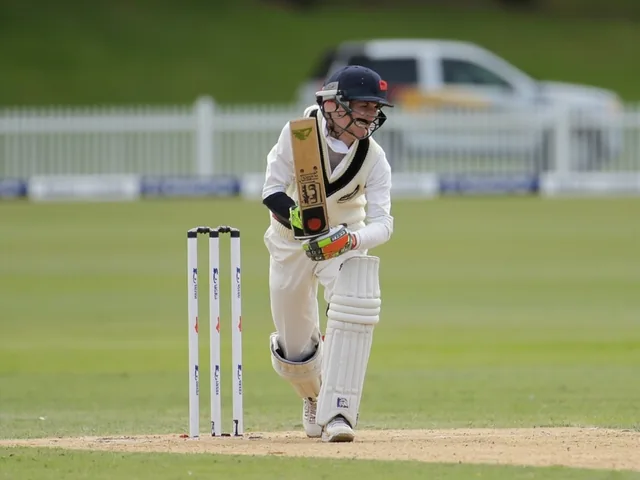
Gamezy runs Rs 15 Crore in weekly prize pools across IPL 2026, with roughly 40% concentrated in mega-contests (Rs 1 lakh+ first prize) and 60% spread across grand-league and head-to-head. Halaplay's prize pools are slightly smaller at Rs 8-10 Crore weekly, but the contest distribution is more balanced: 25% mega, 50% grand-league, 25% head-to-head. For Adda52 readers who play grand-league primarily, Halaplay's distribution means less competition per rupee of expected value.
Head-to-head contest pricing is where the apps split decisively. Gamezy's H2H contests allow entries from Rs 10 to Rs 10,000, with the platform taking a flat 5% commission on the losing stake. Halaplay's H2H is Rs 5 to Rs 1,000, with a 8% commission. If your Adda52 H2H sweet spot is Rs 100-500, both apps work. If you play Rs 1,000+ H2H, only Gamezy supports that range; if you play Rs 5-10 micro-H2H, only Halaplay does.
Practice contests are free on both apps, but the user base differs. Gamezy's practice contests attract more experienced players (you'll see top-100 overall leaderboard regulars in practice); Halaplay's practice pool skews beginner-to-intermediate. For Adda52 readers using practice as a backtest tool, Gamezy's tougher practice pool is the better stress test.
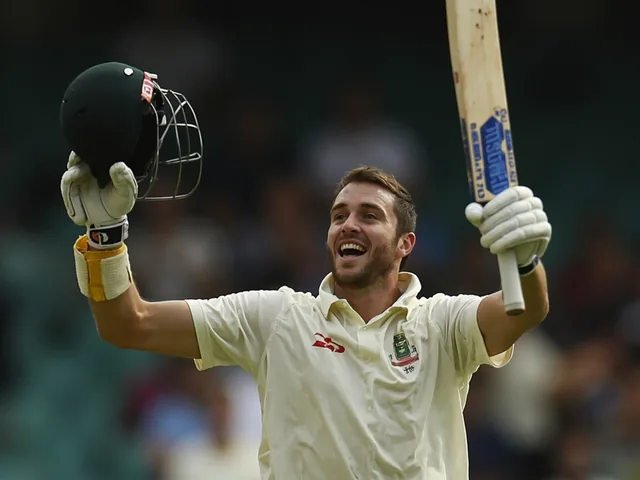
If you are an Adda52 reader who plays 3+ grand-league contests per match and wants lower commission plus faster withdrawals, Gamezy is the structural winner. The 2-3% commission gap compounds across a season, and the KYC speed matters when you want to deposit and play in the same window. Gamezy's flat 25-point-per-wicket bowling system is also more captain-friendly for wicket-taker strategies on Indian pitches.
If your Adda52 strategy is micro-contest grinding and small-stakes H2H (Rs 5-50 range), Halaplay's lower fee overlay and Rs 5 H2H support make it the better primary app. Halaplay's live-tracking frequency and captain-suggestion UX are also stronger for mid-match active management. The trade-off is slower KYC and the 4-hour withdrawal hold during peak traffic.
For readers who play both styles — and most Adda52 users do, since the platform itself supports both Rs 1 contests and grand-leagues — the cleanest setup is Gamezy as the grand-league primary and Halaplay as the micro-contest primary. Use Adda52 for whatever contest format the platform does best that week (often practice + headline contests), Gamezy for grand-league rotations, and Halaplay for the Rs 1-50 grind. This 3-app rotation is standard among top-1000 leaderboard players and is what the Adda52 squad-builder workflow supports natively.
One final note on bonuses: Gamezy's welcome offer is typically a flat Rs 50-100 sign-up credit with a 5x wagering requirement on grand-league entries only. Halaplay's welcome offer is a Rs 30 sign-up credit plus a 50% first-deposit match up to Rs 500, with a 3x wagering requirement across all contest types. Halaplay's welcome is more generous and easier to clear, but the entry amount is lower. Stack the welcome bonuses across both apps during a low-stakes week and you will extract roughly Rs 200-300 in expected-value bonus credit before your first real-money contest.
For Adda52 readers serious about season-long ROI, the rotation framework is straightforward: allocate 50-60% of weekly contest volume to Gamezy grand-leagues (where the commission gap and bowling math give you the edge), 30-40% to Halaplay micro-contests (where the lower fee overlay and H2H pricing help), and 10-20% to Adda52 headline contests (where the platform's native features — live tracking, predictions hub, IPL 2026 squad intel — add informational edge).
Track your ROI per app weekly. After 4-6 weeks, the structural winners will show up clearly: if your Gamezy ROI is +3% and Halaplay is -2%, lean further into Gamezy. If Halaplay is +4% and Gamezy is flat, rotate more aggressively to Halaplay. The platforms themselves change slowly (commission, point system, KYC speed), so a 6-week window is usually enough to identify which app is structurally best for your specific play style.
For the live IPL 2026 season and the upcoming T20 World Cup 2026, both apps will run promotional boosts (multiplier contests, guaranteed prize pools, IPL team-specific leaderboards). Stack the boosts across all three platforms — Adda52, Gamezy, Halaplay — during high-traffic windows. The combined expected value from cross-platform boost stacking is typically 8-12% higher than single-platform play, and it is the closest thing to a "free roll" in fantasy cricket.
